Quick answer
What underwater archaeologists actually found in Issyk Kul, and why the “Atlantis” label should not replace evidence.
There are real archaeological sites underwater
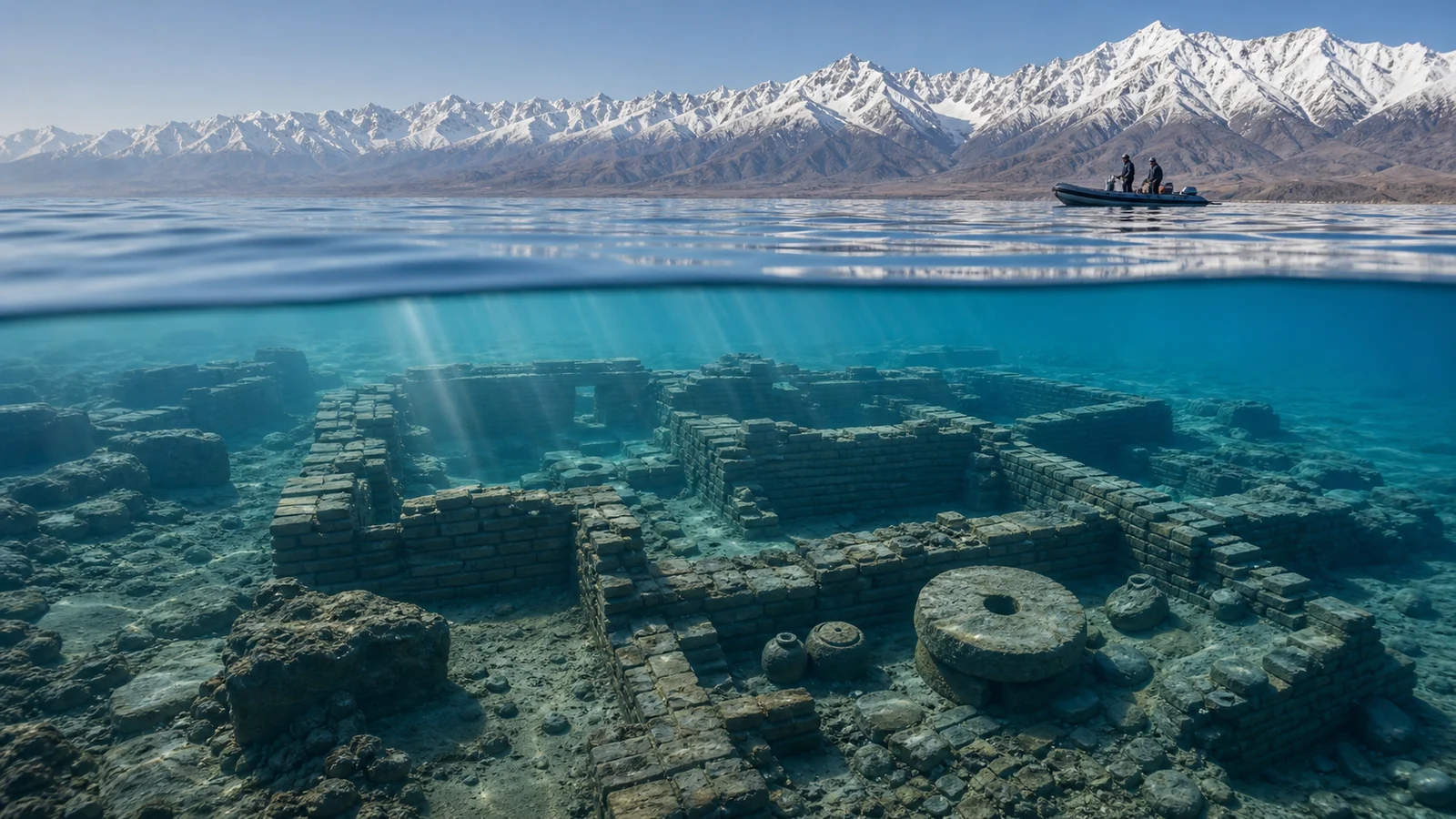
Underwater work in 2023–2024 documented medieval brick structures, kiln complexes, pottery, animal bones, slag and a preserved cultural layer. The peer-reviewed study supports the conclusion that a large medieval settlement became submerged. That is remarkable evidence, but “Atlantis” is a media metaphor, not the researchers’ finding.
Lake levels changed through time, while erosion and regional seismicity affected shore settlements. Dating each site and explaining how it flooded requires excavation and material analysis; one dramatic story cannot describe every submerged monument.
An Issyk-Kul folk tale speaks of a cruel ruler, a kidnapped woman and a palace swallowed by water after her death. It offers a moral explanation for the lake’s creation. Other tales mention Timur, Santash stone piles or Genghis Khan. They belong to oral culture and are not proven by the underwater finds.
The evidence-based story is already powerful: communities and exchange routes existed around Issyk-Kul for millennia, and landscape change preserved traces beneath the water. Explore regional attractions, build a Karakol itinerary, or request local planning help.
Sources: peer-reviewed 2023–2024 research, KRSU research overview, recorded Issyk-Kul legend.
_Updated 29 July 2026. New claims should be checked against archaeological publications, not sensational headlines._
Plan your trip
Find a stay and experiences in Karakol
Compare options and send an enquiry right on the site.