Quick answer
Two famous Jeti Oguz legends, the geology behind the red rocks and a practical route from Karakol. Why the rocks are called Seven Bulls Jeti Oguz, west of Karakol, is a wall…
Why the rocks are called Seven Bulls
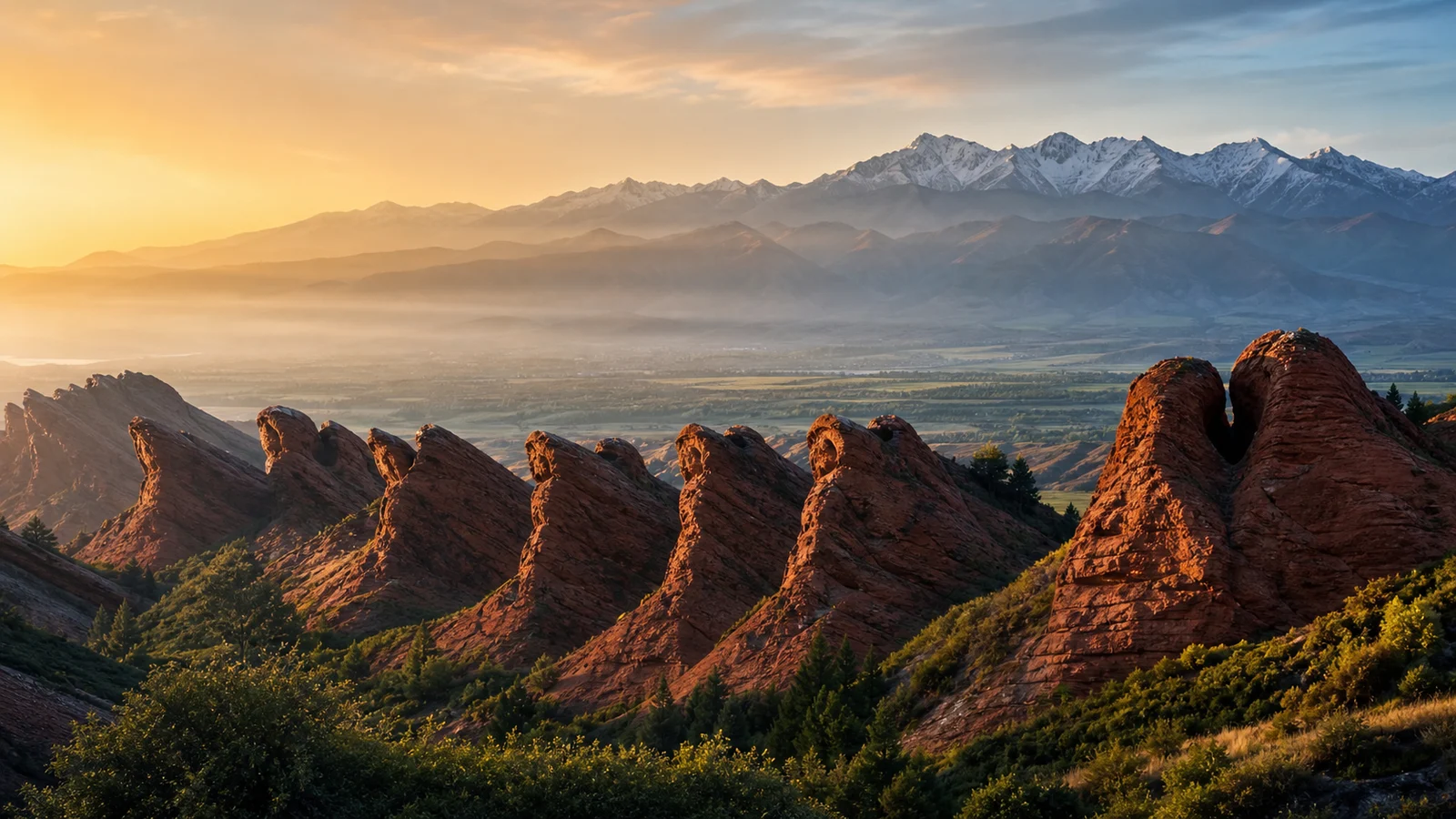
Jeti-Oguz, west of Karakol, is a wall of red sandstone whose ridges resemble resting bulls. The exact number depends on the viewpoint. A widely recorded oral tale tells of rival rulers, a kidnapped woman, seven sacrificed bulls and a tragic flood of blood. This is folklore, not a documented historical event, and storytellers preserve different versions.
Nearby, the Broken Heart formation is linked to another tale of unhappy love. Geology offers a different layer of the story: iron-bearing minerals and erosion produced the colour and shapes. The legend matters because it shows how a community transformed a striking landscape into a warning about jealousy, violence and consequence.
Allow half a day or a full day from Karakol. Stop at Broken Heart, choose a safe viewpoint for Seven Bulls and continue into the valley only when road and weather conditions permit. Do not climb unstable scree or carve the rock.
Use the Jeti-Oguz place page, compare local services, or send a route request. Confirm transport, waiting time and road access before departure.
Sources: Visit Karakol, Advantour’s recorded version of the Jeti-Oguz legend.
_This article clearly separates verifiable place information from oral tradition. Updated 29 July 2026._
Frequently asked questions
What is the Broken Heart rock in Jeti-Oguz?
It is a red-rock formation associated with several local legends. The stories are cultural traditions rather than a single verified historical account.
Can Jeti-Oguz be visited from Karakol in one day?
Yes, it is a common day trip, but travel time and mountain conditions should be checked before departure.
Plan your trip
Find a stay and experiences in Karakol
Compare options and send an enquiry right on the site.