Quick answer
The story of a wooden cathedral that survived changing uses, major damage and restoration. Why the cathedral is wooden Holy Trinity Cathedral is tied to Karakol’s early…
Why the cathedral is wooden
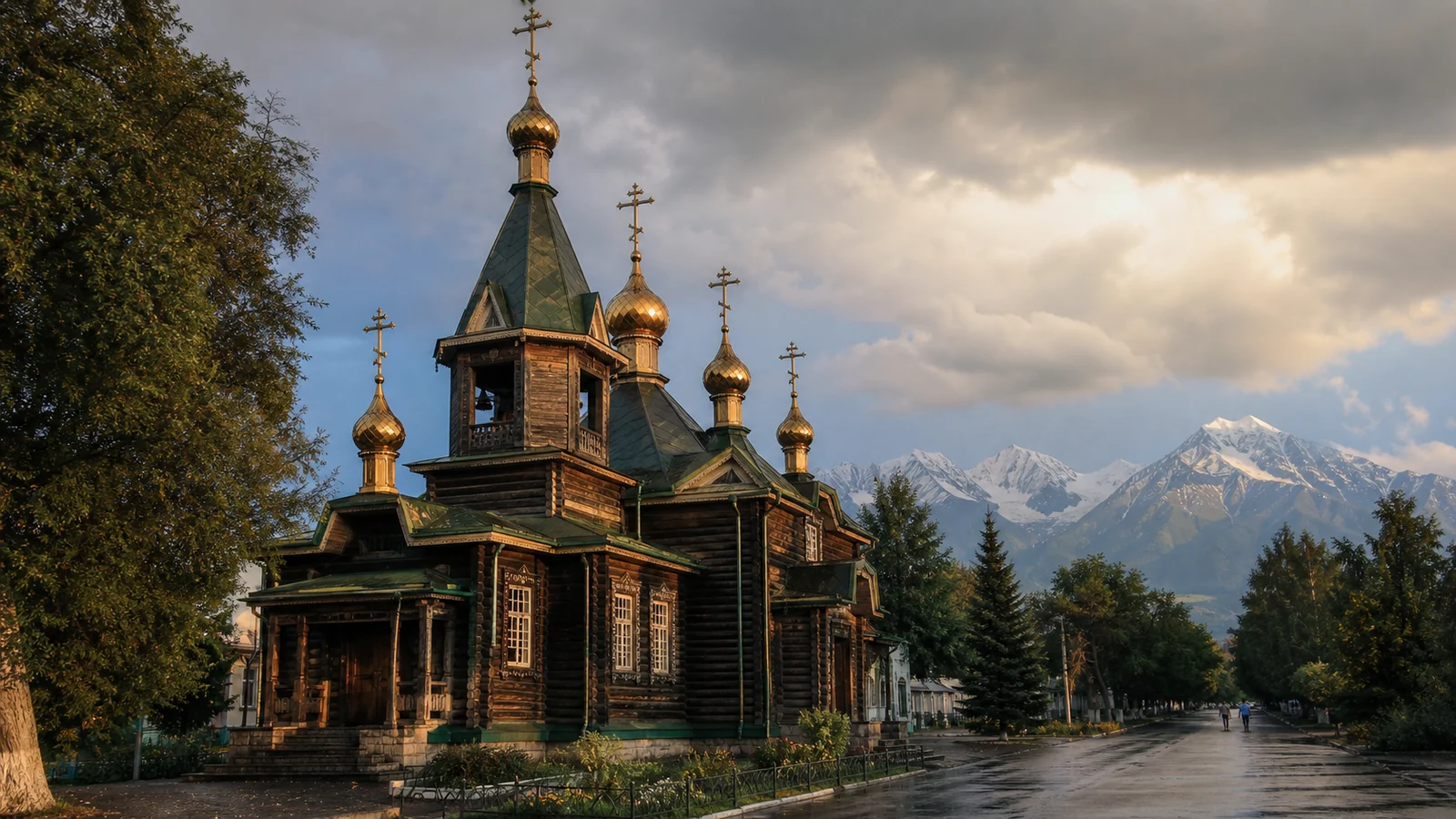
Holy Trinity Cathedral is tied to Karakol’s early development. Successive places of worship preceded it, while the 1889 earthquake almost destroyed the former building. Timber construction became important in Semirechye because it could respond better to regional seismic conditions. The present cathedral is recognised by its log walls, bell tower and domes.
After the Revolution the building lost its original role. At different times it housed a school, educational institutions, a gym, theatre, dance hall and even a coal store. It returned to worshippers in 1947, then reverted to secular use in 1961. The structure suffered serious damage and lost its domes. Restoration began in 1986 after its historic importance was recognised, and it later returned to the religious community.
This is not a frozen relic. It records earthquakes, political change and the city’s shifting institutions. Its proximity to the Dungan Mosque also reveals Karakol as a meeting place of cultural traditions.
The cathedral remains active. Dress modestly, avoid disrupting services and ask before indoor photography. Combine it with the mosque, bazaar and museum for an unhurried walking day. Browse Karakol attractions or request a guided visit.
Sources: Visit Karakol — Holy Trinity Cathedral, Visit Karakol — architectural heritage.
_Updated 29 July 2026. Confirm service times and visitor arrangements locally._
Plan your trip
Find a stay and experiences in Karakol
Compare options and send an enquiry right on the site.